
Services
Remote Video Monitoring, Virtual Patrols and Alarm Verification
McCray designs remote video monitoring programs that extend coverage beyond posted hours and tie each camera event to a defined response. We integrate officers and monitoring with the client’s GSOC or a monitoring partner’s operations center, and add on-site officers where the risk calls for a person on the floor.
What Remote Monitoring Covers
Remote monitoring places operators on the client’s existing CCTV and access control systems during the hours and conditions the client defines. Operators watch live feeds, respond to analytics events and follow written procedures for each site, instead of reviewing footage after a loss has occurred.
Programs are scoped by site, by camera and by time window. A flagship store may need overnight perimeter coverage and alarm verification, while a distribution site may need gate and yard monitoring around shift change.
- Live CCTV monitoring of entrances, stockrooms, loading docks, yards and perimeters
- Remote guarding with IP audio talk-down to deter trespass before entry
- Analytics alerts for line crossing, loitering and after-hours motion
- Access control event review, including door forced and door held open alarms
- Escalation to on-site officers, mobile patrol, client contacts and police
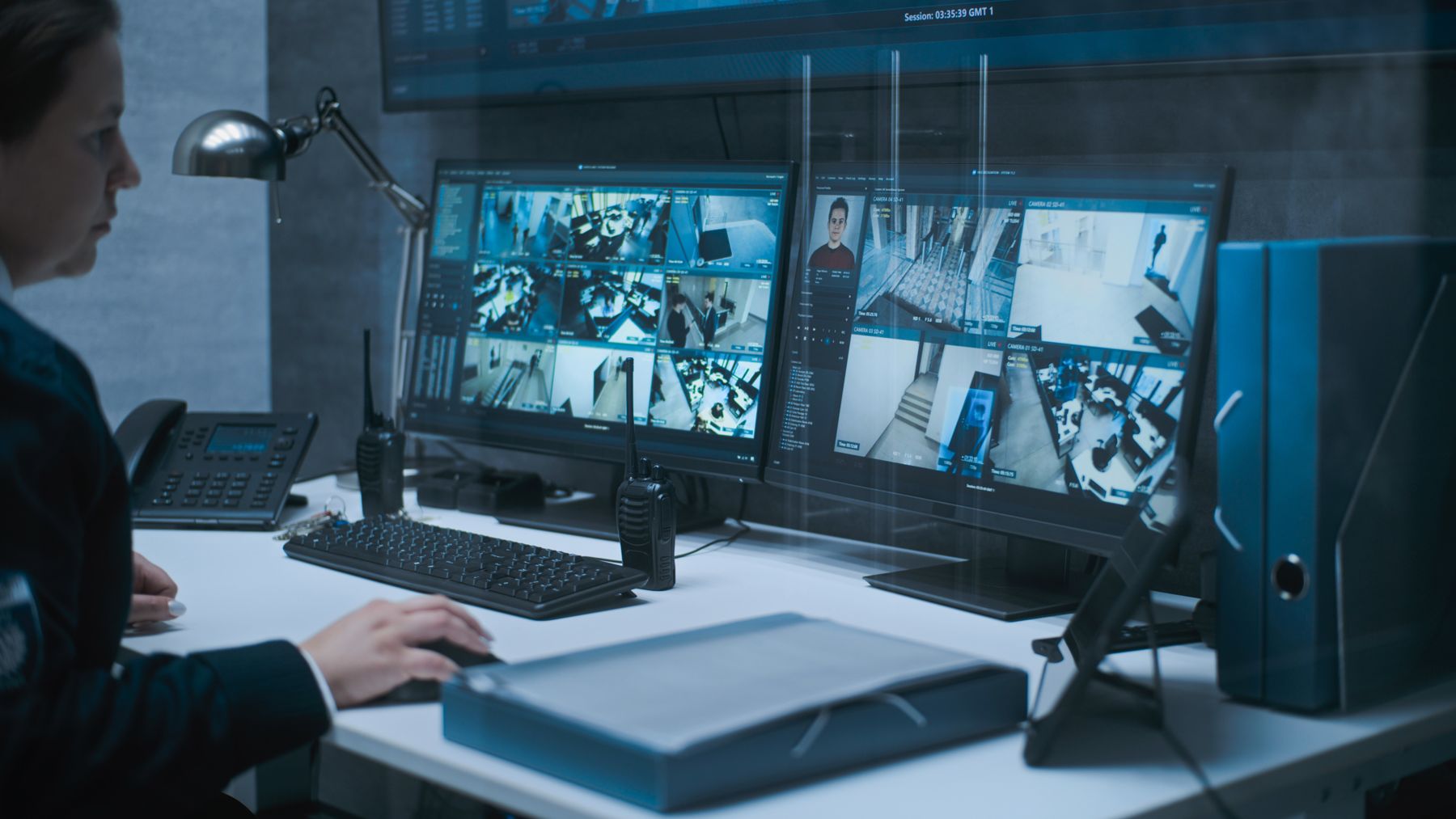
Virtual Patrols and Remote Guard Tours
A virtual patrol is a scheduled, documented tour of a site’s cameras on a set route, the remote equivalent of an officer’s guard tour. Operators check doors, gates, display cases, fixtures and lighting, and log exceptions such as a propped door or an unexpected vehicle.
Virtual patrols suit closed stores, vacant units, construction sites and satellite locations where a full-time post is not justified. Tour frequency and checkpoints are set in the post orders and recorded in PostControl, so the client can see what was checked and when.
Alarm Verification
Unverified intrusion alarms consume police resources, and some jurisdictions apply false alarm fines or require verification before police will respond. Video verification lets operators see the scene before a response is requested, so a confirmed intrusion can be reported with what is actually happening and a false alarm can be closed without a wasted trip.
Verification procedures are written to align with the alarm monitoring company’s protocols and local ordinances. Where the program calls for it, we reference industry practices such as enhanced call verification (ECV) and the ANSI/TMA AVS-01 Alarm Validation Scoring Standard when defining what information is passed to dispatch.
Integration With a Client GSOC or Partner Operations Center
McCray does not ask clients to replace systems that already work. We integrate officers and monitoring with the client’s GSOC or with a monitoring partner’s operations center, so alerts, escalations and incident records follow a documented process across sites.
For clients with an internal GSOC, we align our officers and post orders to its escalation matrix and reporting requirements. For clients without one, we coordinate monitoring through a vetted partner operations center and connect it to on-site staffing and PostControl reporting. Integration covers the VMS platform, camera inventory and health, contact trees, and how an incident moves from a video alert to a written report.
When to Pair Monitoring With On-Site Officers
Cameras detect and document, and talk-down can deter, but remote operators cannot assist a customer, manage a crowd or physically intervene. The right design depends on the site’s risk profile, operating hours and the consequences of a delayed response.
Many programs combine both: officers during trading hours, remote monitoring overnight, and mobile patrol or emergency security officers dispatched when an alarm is verified. On-site posts are staffed using McCray’s Officer Tier Structure.
- Monitoring alone: low-traffic, after-hours or vacant sites with sound camera coverage
- Monitoring with mobile patrol: sites that need periodic physical checks and alarm response
- Monitoring with on-site officers: high-value merchandise, public-facing posts and known organized retail crime exposure
Reporting and Program Review
Every monitored event, virtual patrol and escalation is documented. Incident reports, shift reports and tour logs are recorded in PostControl alongside on-site officer reporting, giving security and loss prevention leaders a consistent record for each location.
Program reviews look at alert volume, false alarm rates, camera outages and response outcomes, so camera placement, analytics rules and staffing can be adjusted to what is happening at the site.
Frequently Asked Questions
Does McCray operate its own monitoring center?
No. McCray integrates officers and monitoring with the client’s GSOC or with a vetted monitoring partner’s operations center. We design the program, write the procedures, connect monitoring to on-site staffing and keep the reporting in PostControl.
Can McCray monitor a client’s existing cameras?
In most cases, yes. We start with a review of the client’s VMS platform, camera inventory, coverage, image quality and network connectivity, and identify gaps before monitoring begins. Some sites need added cameras, lighting or audio to support remote guarding.
What is the difference between remote monitoring and a virtual patrol?
Remote monitoring responds to live events and alerts as they occur. A virtual patrol is a scheduled tour of defined cameras and checkpoints, logged like a physical guard tour. Most programs use both.
Is remote monitoring a replacement for security officers?
Sometimes, for low-traffic or after-hours sites. For public-facing locations, high-value merchandise or sites with organized retail crime exposure, monitoring works best alongside on-site officers or mobile patrol, not instead of them.
How are monitored incidents reported?
Monitored events, escalations and virtual patrol logs are documented in PostControl using the same incident and shift reporting as on-site officers.
Can monitoring cover multiple locations under one program?
Yes. Multi-site programs use common procedures, escalation rules and reporting across locations, with site-specific post orders where layouts or risks differ.
Related Services
- Retail Security Services
- Luxury Retail Asset Protection
- Emergency Security Services
- Construction Site Security
- Warehouse Security
- Risk Assessment and Consulting
Request a Security Assessment
Share location details and coverage needs. A member of the McCray team will review the request and follow up to discuss a written proposal. Or call 833-832-6647.